Contents
For most of the space age, rockets were used once and thrown away. Every launch meant building a new vehicle costing tens or hundreds of millions of dollars, and then dropping it in the ocean. That made space one of the most expensive places to send anything. Over the past 15 years, the price has fallen dramatically, and the result can be seen in the sky: thousands of new satellites every year.
How far costs have fallen
The CSIS Aerospace Security Project, part of a Washington think tank, has compiled the cost of putting one kilogram into low Earth orbit on rockets since the late 1950s. Our World in Data publishes the figures, adjusted to 2021 dollars.
| Rocket | First successful launch | Cost per kilogram |
|---|---|---|
| Saturn V | 1967 | $5,400 |
| Space Shuttle | 1981 | $65,400 |
| Delta II | 1990 | $38,800 |
| Atlas V | 2002 | $8,100 |
| Falcon 9 | 2010 | $2,600 |
| Falcon Heavy | 2018 | $1,500 |
The Space Shuttle, despite being partly reusable, was among the most expensive ways to reach orbit. The big drop came with SpaceX’s Falcon rockets. Falcon Heavy brought the cost to about a fortieth of the Shuttle’s.
These figures need care. The CSIS explains that they usually divide a rocket’s launch cost by the most it can lift to a particular low orbit, which few missions use in full. Definitions of cost also vary between rockets, and many launch contracts are private or classified, so prices are hard to verify. The trend is clearer than any single number.
Falcon Heavy brought the cost of reaching orbit to about a fortieth of the Space Shuttle’s.”
| Item | US dollars per kilogram, 2021 prices |
|---|---|
| Space Shuttle (1981) | $65,400 |
| Delta II (1990) | $38,800 |
| Atlas V (2002) | $8,100 |
| Saturn V (1967) | $5,400 |
| Falcon 9 (2010) | $2,600 |
| Falcon Heavy (2018) | $1,500 |
Source: CSIS Aerospace Security Project, via Our World in Data. Chart: The Sidelight.
Why reuse changes the economics
A rocket is mostly fuel tanks and engines, and the engines and structure of the first stage, the large lower section that lifts the rocket off the ground, are the most expensive part. On a traditional rocket that stage falls back to Earth after a few minutes and is lost.
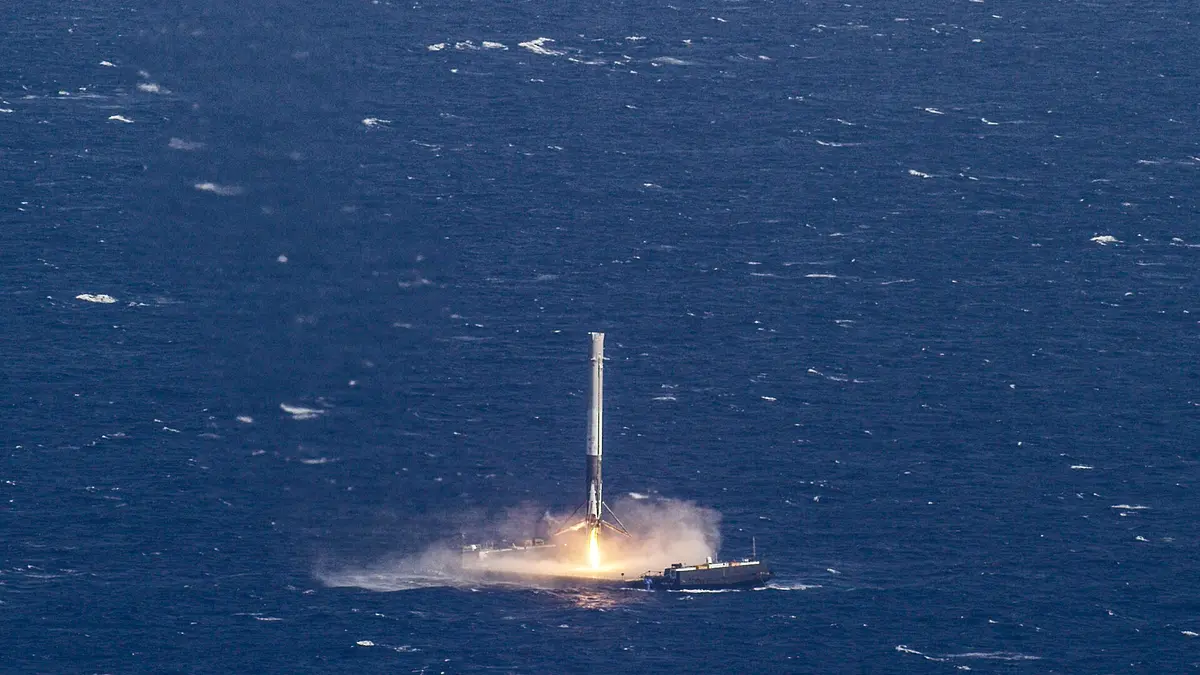
SpaceX designed its Falcon 9 to bring the first stage back. After it separates, it turns around, fires its engines to slow down and lands upright on a pad or a ship at sea. SpaceX describes Falcon 9 as the first orbital-class rocket capable of being flown again, and says reusability allows it “to refly the most expensive parts of the rocket”. It also recovers the nose cone, called the fairing, that protects satellites on the way up.
Reuse cuts costs in three ways:
- Less to build. A stage that flies many times spreads its cost over many launches.
- Faster turnaround. Refurbishing a landed stage is quicker than building a new one, so the same factory supports more launches.
- More launches, lower costs. A rocket that flies often gets cheaper to operate, as the work becomes routine.
There is a trade-off. A rocket that saves fuel to land itself cannot carry quite as much as one that uses everything to reach orbit. SpaceX lists Falcon 9’s capacity to low Earth orbit at 22,800kg.
What cheaper launches have made possible
Lower costs have changed what gets launched and by whom. The European Space Agency’s 2026 report on the space environment says more than 300 launches carried over 4,000 new payloads into space during 2025, roughly ten a day.
Three changes stand out.
- Satellite constellations. Companies now launch thousands of small satellites to provide internet connections from space. That would have been unaffordable at Shuttle-era prices.
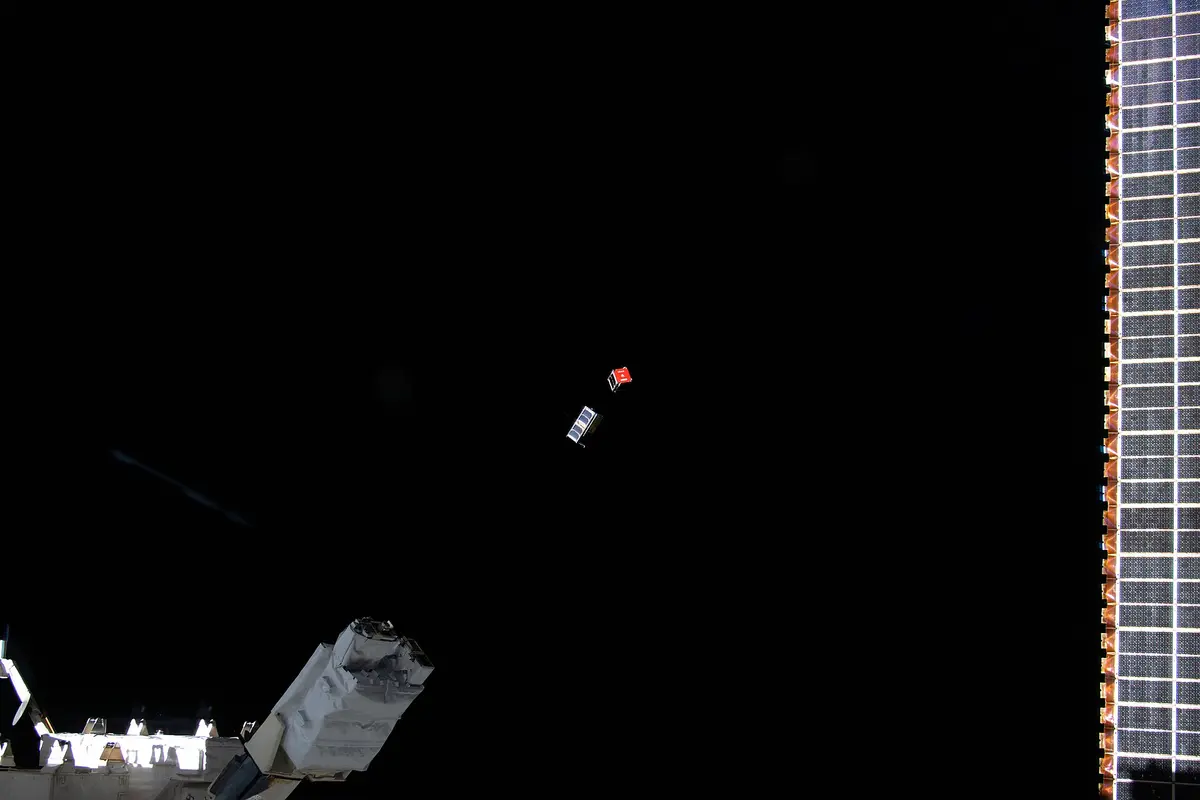
- Small satellites for more users. Universities, start-ups and smaller countries can more easily afford to put their own satellites in orbit, often sharing a ride with others on the same rocket.
- A crowded orbit. The surge in launches has raised concern about collisions and debris, which our article on how many satellites are in orbit examines.
The next step: fully reusable rockets
Falcon 9 reuses its first stage but not its second, which is still discarded on each flight. SpaceX’s much larger Starship is designed to reuse both stages.
It is still being tested. On 28 September 2026, Starship made its first orbital flight from Texas, NPR reported, and deployed 26 of SpaceX’s new, larger Starlink internet satellites, which only Starship can launch. One of the ship’s engines failed during the climb, and mission managers shortened the flight from about ten hours to three. The giant booster simulated a landing at sea instead of returning to be caught by its launch tower, and the ship was expected to splash down in the Pacific. SpaceX aims eventually to recover and reuse the ship as well.
Starship matters beyond SpaceX. NASA plans to use it as the vehicle that lands astronauts on the Moon. If it works as intended, its much larger size could push the cost per kilogram down further. That is still a goal, not a result.
What could slow the fall
- Competition. Much of the price fall has come from one company. Other launchers are developing reusable rockets, and real competition would help keep prices falling.
- Reliability. A reusable rocket has to survive many flights. A serious failure can ground a fleet.
- Demand. Lower prices encourage more launches, but the satellites must still pay their way.
- Rules and debris. As orbits fill up, tougher requirements on removing old satellites and avoiding collisions could add costs.
The broad trend is unlikely to reverse. Reaching orbit has become a matter of a few thousand dollars a kilogram instead of tens of thousands. That has made space a far more commercial market than it was when governments did most of the launching.
References and sources
- 01Launch cost per kilogram of payload · Our World in Data, from CSIS Aerospace Security Project · Updated 4 March 2025
- 02Space Launch to Low Earth Orbit: How Much Does It Cost? · CSIS Aerospace Security Project · Updated 1 September 2022
- 03Falcon 9 · SpaceX · Accessed 13 November 2026
- 04ESA Space Environment Report 2026 · European Space Agency · 14 September 2026
- 05SpaceX’s Starship launches on first orbital mission from Texas · NPR, via OPB · 28 September 2026
- 06Lead image: Falcon 9 first stage landing on Droneship.jpg · SpaceX, via Wikimedia Commons (CC0) · Accessed 13 November 2026
House byline
Articles under this byline are researched and drafted with AI assistance, with every figure checked against its source before publication. The editor, Pankaj Guleria, reviews them and corrects them where needed.
Edited by Pankaj Guleria, Founder and Editor