Contents
On Friday 13 November, Elon Musk posted on X: “A petition is underway to reinstate Jensen and I’m signing it too.” It was a striking show of support from the chief executive of Tesla and SpaceX, one day after Jensen Huang resigned from the company he co-founded in 1993. The post spread quickly, and many shared it as though Huang’s return were now in motion.
So is it true? Yes: Musk did write it, as AOL and Interesting Engineering reported. But a petition, however famous its signers, cannot reinstate a chief executive. This article explains what Musk said, what the petition is, and who actually decides.
What happened
On 12 November, Nvidia announced in a filing that Huang had resigned as president, chief executive and a member of the board, “effective immediately.” Colette Kress, the chief financial officer, became interim chief executive while the board searches for a permanent successor, considering both internal and external candidates. The filing did not give a reason.
The resignation followed a board investigation, announced on 8 November, into reports that Huang had been the target of a foreign intelligence effort. Huang had apologised to staff for conduct in his personal life. Our profile of Huang covers that background. Bloomberg reported that directors left Huang no option but to resign, according to BeInCrypto.
What Musk actually said
Musk’s post was a reply to another X user urging Nvidia staff to back Huang’s return, AOL reported. A day earlier, when an account suggested Musk should hire Huang himself, Musk replied: “That would be an honor.”
Two details are worth noting. Musk said he was signing a petition, but Interesting Engineering reported that it is not clear which one he meant. And we have not been able to confirm that his name appears on any petition.
What the petition is
The best documented is a Change.org petition titled “Bring Jensen Huang back as Nvidia CEO.” It was started on 12 November by Mohamed Adany, who describes himself as an Nvidia shareholder, and had about 170 verified signatures by Friday evening, according to Interesting Engineering. Other reports describe several petitions circulating among Nvidia staff and supporters.
Support inside Nvidia was strong even before Huang left. In a survey by the workplace app Blind, published on 10 November, 88% of Nvidia employees who answered said Huang should remain chief executive.
| Item | per cent of Nvidia respondents, before he resigned |
|---|---|
| Remain chief executive | 88% |
| Step down voluntarily | 11% |
| Be removed by the board | 1% |
Blind surveys its own users, so this is not a random sample. Blind did not publish the number of Nvidia respondents.Source: Blind. Chart: The Sidelight.
Who actually decides
Nvidia’s chief executive is appointed by its board of directors. Under the company’s bylaws, a majority of the directors in office decides who holds executive posts. With Huang gone, that means six of the ten remaining directors, BeInCrypto reported.
That leaves a petition with no formal role:
- Shareholders do not vote on the chief executive. They elect the board, and the board picks the chief executive.
- Musk has no seat on Nvidia’s board, so his signature carries no more formal weight than anyone else’s.
- Huang controls only about 3.58% of the votes, according to Nvidia’s 2026 proxy statement as cited by BeInCrypto. The asset managers BlackRock and Vanguard each hold more than 7%.
A petition can show the board how strongly people feel. It cannot make the decision for it.”
What a petition can do is apply pressure. A public show of support from employees, investors and figures like Musk may shape how the board weighs its options. But the directors also have to consider the investigation that came before the resignation, which has not published any findings.
What it means for investors
Nvidia’s shares closed on 12 November about 11% below their level on 6 November, BeInCrypto reported. The analyst Dan Ives put the value of Nvidia at $300 a share with Huang and $225 without him, a sign of how much of the company’s story investors tie to its founder.
The bottom line
The headline is true: Elon Musk said he was signing a petition to bring Jensen Huang back. But it is a gesture of support, not a mechanism. Whether Huang returns is a decision for six of Nvidia’s ten directors, and none of them has said anything publicly about it.
References and sources
- 01NVIDIA Form 8-K and press release: NVIDIA Announces CEO Transition · NVIDIA, filed with the US Securities and Exchange Commission · 12 November 2026
- 02Elon Musk backs petition urging Nvidia to bring its longtime CEO Jensen Huang back · Interesting Engineering · 13 November 2026
- 03“I’m signing it too”: Elon Musk says a petition to reinstate Jensen Huang as Nvidia CEO is underway · AOL · 13 November 2026
- 04Can Elon Musk Bring Jensen Huang Back as Nvidia CEO? · BeInCrypto, via Yahoo Finance · 14 November 2026
- 0560% of Professionals Say Jensen Huang Should Remain Nvidia CEO Amid Affair Scandal, Blind Survey Finds · Blind · 10 November 2026
- 06Jensen Huang: the Nvidia founder who built the engine of the AI boom · The Sidelight · 13 November 2026
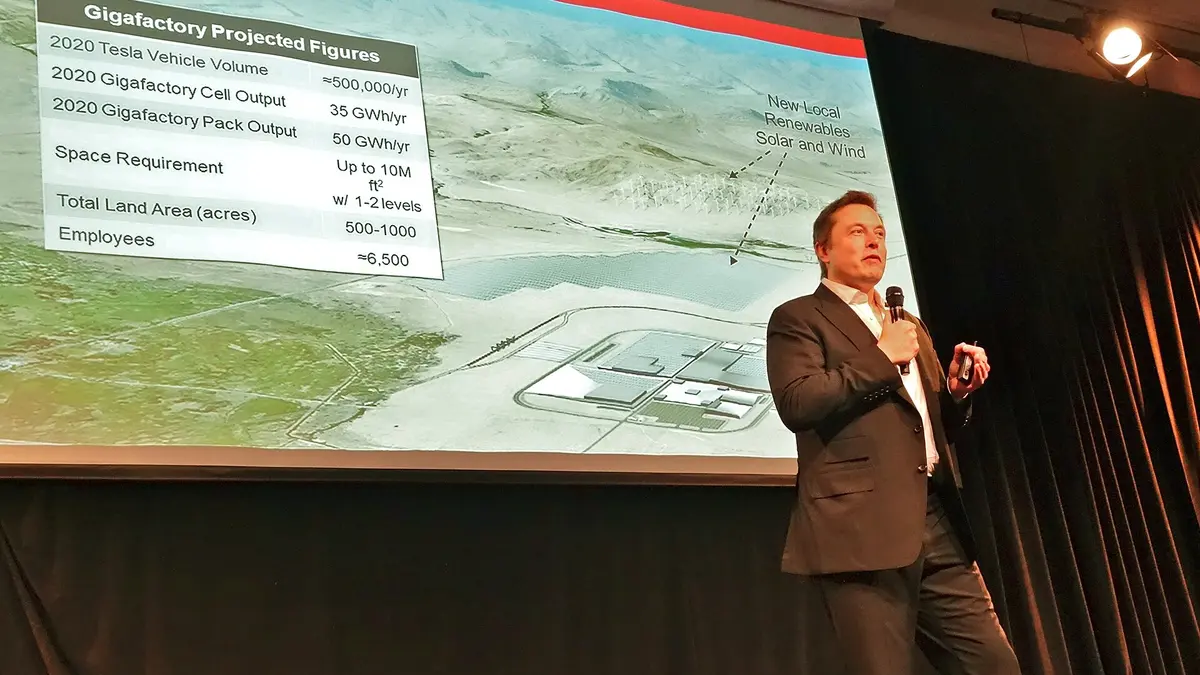
- 07Lead image: Elon Musk describing the Tesla Gigafactory · Steve Jurvetson, via Wikimedia Commons (CC BY 2.0) · Accessed 17 November 2026
House byline
Articles under this byline are researched and drafted with AI assistance, with every figure checked against its source before publication. The editor, Pankaj Guleria, reviews them and corrects them where needed.
Edited by Pankaj Guleria, Founder and Editor