
Contents
Microsoft, Alphabet, Amazon and Meta are spending hundreds of billions of dollars a year on data centres, chips and power to run artificial intelligence, a pace of investment the Bank of England calls unprecedented. The question now is whether the revenue will arrive fast enough to justify it, and what happens to the financial system if it does not.
This article is general information, not personal financial advice.
Chapter 1
What the money is spent on
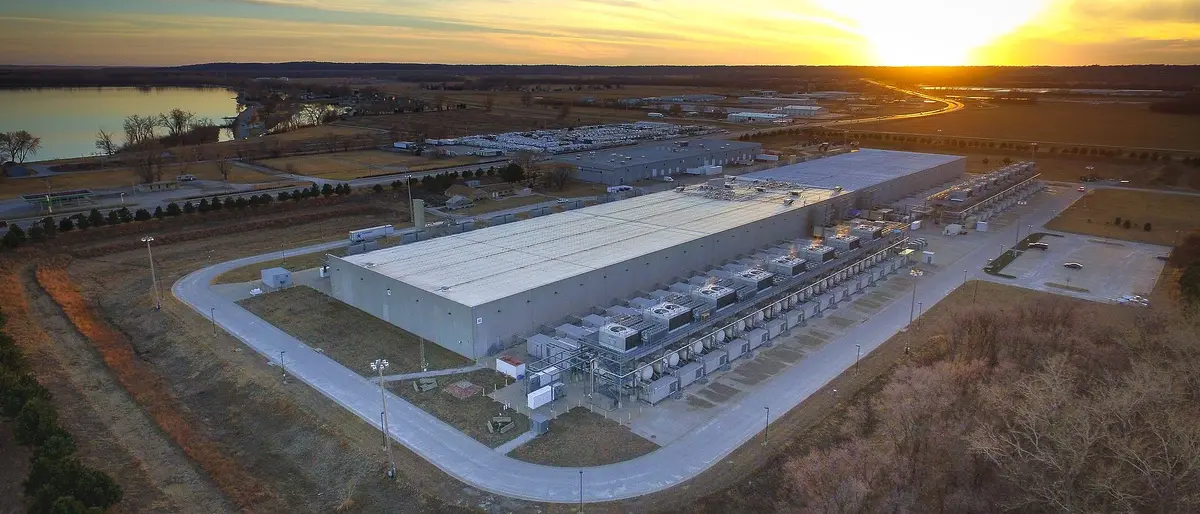
The spending shows up in company accounts as capital expenditure, or capex: money spent on long-lasting physical assets rather than day-to-day running costs. For these companies it means land and buildings for data centres, the servers and specialised chips inside them, networking equipment, and increasingly the power supplies to run them. Microsoft’s latest quarterly filing describes it plainly: spending on property and equipment will continue, including new facilities and data centres.
That matters for the economics, because the chips and servers inside a data centre wear out or are overtaken by newer models much sooner than the building itself.
Chapter 2
How much they are spending
Each company reports its spending in its quarterly filings with the US Securities and Exchange Commission. The latest cover the period to 30 September 2026.
| Company | Period | Spending on property and equipment | A year earlier |
|---|---|---|---|
| Amazon | Nine months to September | $175.7bn | $92.3bn |
| Alphabet | Nine months to September | $132.0bn | $63.6bn |
| Meta | Nine months to September | $83.1bn | $48.3bn |
| Microsoft | Three months to September | $39.4bn | $19.4bn |
Microsoft’s financial year runs to June, so its figure covers one quarter. The other three have each roughly doubled their spending in a year. Together, Amazon, Alphabet and Meta spent about $391 billion in nine months.
The companies expect more. Amazon’s filing says it expects cash capital expenditure of about $220 billion for 2026, and expects it to “meaningfully increase” in 2027, mainly because of technology infrastructure. Meta’s third-quarter results forecast spending of $135 billion to $145 billion for the year.
Amazon, Alphabet and Meta spent about $391 billion on property and equipment in nine months, roughly double the year before.”
Forecasts of future spending keep rising. The Bank of England notes that when it published its December 2025 report, market forecasts put the largest cloud companies’ capital spending in 2028 at less than $600 billion. By July 2026 the same forecast was over $1 trillion.
| Item | US dollars, billions |
|---|---|
| Amazon | $175.7bn |
| Alphabet | $132.0bn |
| Meta | $83.1bn |
Spending on property and equipment. Microsoft’s financial year differs, so it is left out.Source: Company quarterly filings with the SEC. Chart: The Sidelight.
Chapter 3
Who is paying, and how
For years these companies could fund their investment from the cash their existing businesses generated. That is no longer true. The Bank of England says AI-focused companies reached an inflection point in 2025, when the investment they needed exceeded what they could finance from their own cash flows. They turned to outside money, and the trend accelerated in the first half of 2026.
The money is coming from several directions.
- Selling shares. Alphabet raised just under $85 billion by issuing equity in the second quarter of 2026, according to the Bank. Its own filing shows two new classes of mandatory convertible preferred stock, a kind of share that converts into ordinary shares later, with the proceeds earmarked partly for capital spending to scale AI infrastructure.
- Borrowing. The Bank says AI companies are increasingly using public bond markets, private lenders and bank loans. It cites estimates by the investment bank Morgan Stanley that more than half of the outside financing needed for data centres between 2026 and 2028 could come from debt.
- Leases. Some capacity is rented under long-term leases. Meta, for example, counts payments on such leases within its capital expenditure, which reached $85.8 billion in the nine months to September on that measure.
Debt changes the risk. A company that funds investment from its own cash can simply slow down if the bet goes wrong. A company that has borrowed has to keep paying interest whatever happens.
Chapter 4
Is the revenue coming?
The spending is meant to be repaid by revenue from AI and cloud computing, the business of renting computing power over the internet. On that front the latest filings show strong growth.
Google Cloud doubled in a year. Microsoft’s chief executive said in its annual results that Azure revenue passed $100 billion for the first time in the year to June 2026.
The order books are larger still. Microsoft reports a commercial remaining performance obligation, the value of contracted revenue not yet delivered, of $677 billion, up 73% in a year. Customers have signed up to spend that money over the coming years.
Some of the biggest of those customers are the AI labs themselves. Anthropic, the maker of the Claude models, disclosed in its share listing documents that it had committed to spend about $900.9 billion, almost all on computing and infrastructure, about half of it by the end of 2030 and most of the rest by 2045. That is revenue for the cloud companies. It is also a sign of how much depends on a small number of fast-growing customers continuing to raise money and win users of their own. Our article on how AI companies make money looks at that side of the ledger.
Chapter 5
The case that it will pay off
Supporters of the spending make three main arguments.
- Demand is real and measurable. Cloud revenue is growing at rates rarely seen in companies this large, and contracted future revenue is growing faster still.
- The companies can afford to be early. Their existing businesses in advertising, software and online retail remain very profitable, as our guide to how big tech makes money sets out.
- The cost of being late is high. In a technology that could reshape many industries, a company without enough computing capacity risks losing customers to rivals that have it.
Chapter 6
The case for caution
The Bank of England’s July 2026 report sets out the risks clearly. Its main points:
- The pace is unprecedented. It describes the pace of investment as unprecedented historically, and expectations of future needs have repeatedly been revised upwards.
- Valuations rest on uncertain forecasts. AI-related share prices are underpinned by forecasts of strong long-term earnings growth, which the Bank calls highly uncertain. They depend on the build-out succeeding, on continued access to finance and on how fast AI is adopted. It notes that an index of US semiconductor shares had risen 97% since the start of 2026.
- Debt is growing fast. So far the risks have been contained because outstanding debt is modest. The Bank says that is changing at pace, and that the debt structures being used are increasingly complex and opaque.
- A shock could spread. If AI companies suffered losses or struggled to pay their debts, the Bank warns, global financing conditions could tighten, which could in turn affect lending to the UK economy.
There is also an economic risk the filings themselves hint at. The equipment ages fast. If AI revenue grows more slowly than expected, companies could be left with expensive capacity that becomes outdated before it has paid for itself.
Chapter 7
Bubble or build-out?
Commentators often compare this with the railway boom of the 19th century and the telecoms boom of the late 1990s. In both cases the technology proved transformative, but much of the money invested was lost, because capacity was built faster than demand arrived and many companies borrowed heavily to build it.
The current boom differs in one important way: it has been led by some of the most profitable companies in the world, which until recently could fund the spending from their own cash. The Bank of England’s warning is that this distinction is fading as debt takes a larger role.
The evidence at the end of 2026 supports neither extreme. Revenue is growing quickly, which a pure bubble would not show. Spending is growing faster still, and its financing is shifting from cash to borrowing, which is how booms usually become dangerous.
Chapter 8
What to watch
- The gap between spending and revenue. If cloud and AI revenue start to grow faster than capital spending, the investment is beginning to pay. If spending keeps outrunning revenue, the strain will grow.
- Profit margins in the cloud businesses. Rising depreciation, the accounting charge for wearing-out equipment, will show up here first.
- Debt issuance. How much the companies and their partners borrow, and on what terms.
- The AI labs’ finances. Much of the demand depends on a few companies whose own revenue must keep growing to cover their commitments.
- Spending guidance for 2027. Amazon has already said it will rise meaningfully. A pause by any of the four would be a significant signal.
References and sources
- 01Microsoft Form 10-Q, quarter ended 30 September 2026 · Microsoft, filed with the US Securities and Exchange Commission · 28 October 2026
- 02Alphabet Form 10-Q, quarter ended 30 September 2026 · Alphabet, filed with the US Securities and Exchange Commission · 29 October 2026
- 03Amazon Form 10-Q, quarter ended 30 September 2026 · Amazon, filed with the US Securities and Exchange Commission · 30 October 2026
- 04Meta Form 10-Q, quarter ended 30 September 2026 · Meta Platforms, filed with the US Securities and Exchange Commission · 22 October 2026
- 05Meta Reports Third Quarter 2026 Results · Meta Platforms · 21 October 2026
- 06Microsoft fiscal year 2026 fourth quarter earnings press release · Microsoft · 29 July 2026
- 07Financial Stability Report, July 2026 · Bank of England · 7 July 2026
- 08Anthropic PBC Form S-1/A · Anthropic, filed with the US Securities and Exchange Commission · 10 November 2026
- 09Lead image: Google Data Center, Council Bluffs Iowa (49062863796).jpg · Chad Davis, via Wikimedia Commons (CC BY 2.0) · Accessed 13 November 2026
House byline
Articles under this byline are researched and drafted with AI assistance, with every figure checked against its source before publication. The editor, Pankaj Guleria, reviews them and corrects them where needed.
Edited by Pankaj Guleria, Founder and Editor