Contents
The companies that build large AI models earn money in two main ways. They sell monthly subscriptions to people and teams who use their chatbots, and they charge businesses according to how much work the models do. A third source, advertising, has recently appeared. What makes the business unusual is the cost side: the computers needed to build and run the models are so expensive that the best-known labs have lost money every year so far.
This article is general information, not personal financial advice.
Until recently most figures about AI labs came from leaks. That changed in October 2026, when Anthropic, the maker of the Claude models, filed to list its shares in the US and had to publish its accounts. Its latest filing is the fullest public picture of how an AI lab earns and spends money, so this explainer leans on it.
Subscriptions: a flat monthly fee
The simplest model is the one most people meet first. A chatbot has a free version with limits, and paid plans that allow more use and stronger models. Anthropic’s pricing page lists a Pro plan at $20 a month, with higher tiers at $100 and $200 a month, and team plans priced per seat, meaning per person. Google sells access to its most capable Gemini models through its Google One subscription, according to Alphabet’s quarterly report.
Subscriptions are familiar, but for Anthropic they are the smaller part. They brought in $6.9 billion in the first nine months of 2026, or 21% of revenue.
Usage fees: paying by the token
The larger part comes from metered use. Models read and write text in tokens, which are small chunks of text, roughly a word or part of a word. Businesses connect their own software to a model through an API, short for application programming interface, and are billed for the tokens that go in and come out.
Prices depend on the model. Anthropic’s published rates charge $4 per million input tokens and $20 per million output tokens for Claude Opus 5.5. Its smallest current model, Haiku 5.5, starts at $0.10 and $0.50.
Anthropic calls this model “pay-for-intelligence”. It produced $26.3 billion, or 79% of revenue, in the first nine months of 2026. The number of customers paying it at least $100,000 a year rose from more than 950 to more than 11,900 in the 12 months to September 2026. Large customers often sign annual or multi-year contracts with a minimum spend in return for fixed prices. Many also buy through the marketplaces of cloud providers such as Amazon, Google and Microsoft.
Advertising: the newest line
Free users cost money to serve, and advertising is one way to earn something from them. OpenAI began testing adverts in ChatGPT in the US in February 2026, shown to people on the free tier and on its low-cost Go plan. In August the company said the business had reached an annualised rate of $1 billion, CNBC reported. The same report put ChatGPT at one billion weekly users, most of them on the free tier.
Where the money goes: compute
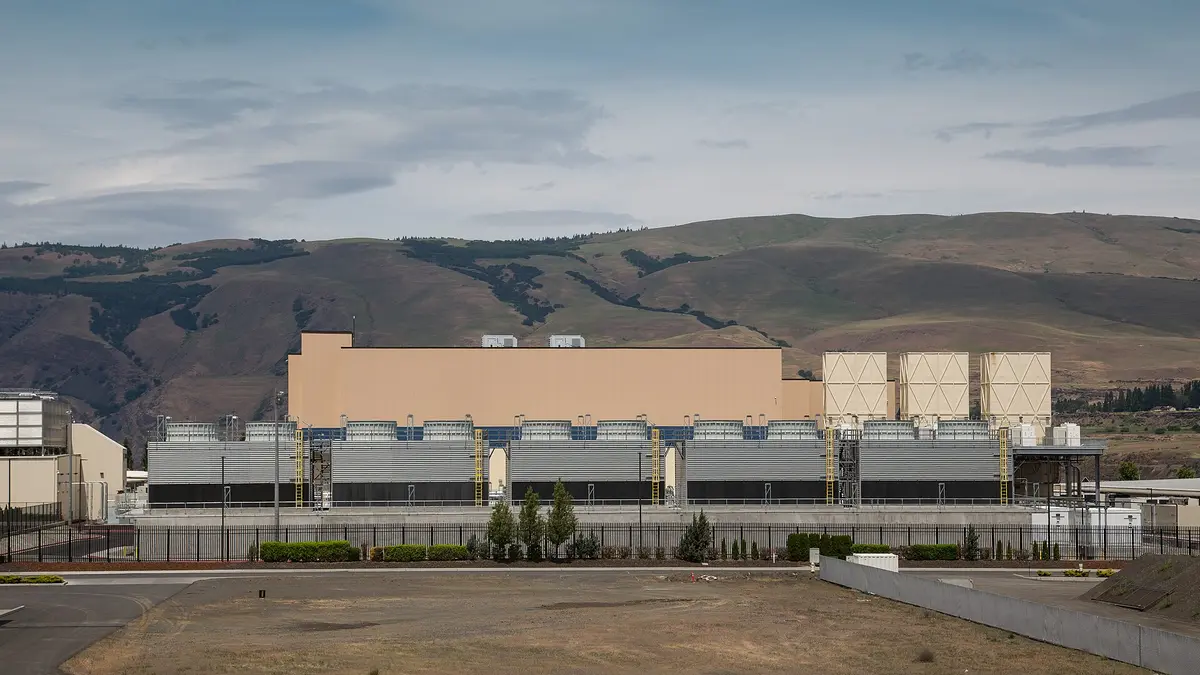
“Compute” is the industry’s word for the processing power used to train a model and then to run it for customers. Labs rent most of it from cloud providers, and it is their largest cost.
| Period | Revenue | Compute and infrastructure | Operating result |
|---|---|---|---|
| 2024 | $386m | $2.5bn | Loss of $3.0bn |
| 2025 | $4.6bn | $7.3bn | Loss of $8.1bn |
| First nine months of 2026 | $33.2bn | $18.8bn | Loss of $1.3bn |
In 2025 Anthropic spent more on compute than it earned in revenue. In 2026 revenue grew much faster than the bill, and compute took about 57 cents of every dollar. The company made an operating profit of $1.0 billion in the three months to June 2026, then an operating loss of $567 million in the following quarter after buying $5.0 billion of extra short-term computing capacity.
In 2025 Anthropic spent more on compute than it earned in revenue.”
Two cautions apply to these figures. First, the headline net loss is far larger: $104.0 billion for the nine months. Of that, $94.3 billion is an accounting charge that arises because the company’s rising valuation increased the value of notes that convert into shares. It is not cash spent on running the business. Second, the future bills are very large. Anthropic says it has committed to spend about $900.9 billion, almost all on compute and infrastructure, with $70.7 billion falling due within 12 months. It warns that its revenue is mostly usage-based and not locked in, while those commitments run for years.
| Item | US dollars, billions |
|---|---|
| 2024 | $0.39bn |
| 2025 | $4.6bn |
| First nine months of 2026 | $33.2bn |
Source: Anthropic share listing documents filed with the SEC. Chart: The Sidelight.
What we know about OpenAI
OpenAI has not published accounts, so its figures are reported, not audited. It told investors that its annualised revenue was roughly $50 billion at the end of September 2026, according to CNBC. An earlier, widely reported figure of $68 billion included revenue collected by its partners. For 2025, people familiar with its finances told CNBC that revenue was $13.1 billion and that the company used up $8 billion of cash. They also said it expects to spend about $600 billion on compute by 2030.
“Annualised” or “run-rate” revenue needs care. It takes a recent short period and multiplies it up to a year. Anthropic, for example, reports a run rate of about $81 billion at the end of October 2026, based on the latest 28 days of usage fees and one month of subscriptions. It is a measure of current pace, not of money already earned.
Who else gets paid
Much of what the labs spend ends up with their suppliers. Microsoft, a major investor in OpenAI, recorded $10.0 billion of revenue from its commercial arrangements with OpenAI in the three months to September 2026, including revenue-sharing payments, according to its quarterly report. The cloud companies are spending heavily in turn. Alphabet’s capital expenditure, mostly on servers and data centres, was $132.0 billion in the first nine months of 2026, about double the $63.6 billion of a year earlier.
The short answer
- Usage fees from businesses are the main earner, at least for Anthropic, which is the only large lab with published accounts.
- Subscriptions are a steady second source.
- Advertising is new and still small next to the other two.
- Compute is the dominant cost, and the commitments already signed are far larger than current revenue.
Whether this becomes a reliably profitable business depends on revenue continuing to outgrow the computing bill. Anthropic’s own filing says its growth rate is likely to slow and that it may not achieve or sustain profitability.
References and sources
- 01Anthropic, PBC: Amendment No. 2 to Form S-1 registration statement · US Securities and Exchange Commission · 10 November 2026
- 02Claude pricing · Anthropic · Accessed 12 November 2026
- 03Pricing: Claude API documentation · Anthropic · Accessed 12 November 2026
- 04Nvidia, Oracle, CoreWeave and other AI stocks sink on OpenAI revenue report · CNBC · 8 October 2026
- 05OpenAI’s ad business shows blistering growth, hits $1 billion annualized revenue run rate · CNBC · 31 August 2026
- 06OpenAI resets spending expectations, tells investors compute target is around $600 billion by 2030 · CNBC · 20 February 2026
- 07Microsoft Corporation: Form 10-Q for the quarter ended 30 September 2026 · US Securities and Exchange Commission · 28 October 2026
- 08Alphabet Inc.: Form 10-Q for the quarter ended 30 September 2026 · US Securities and Exchange Commission · 29 October 2026
- 09Lead image: Google Datacenter - The Dalles, Oregon (17832143871).jpg · Tony Webster, via Wikimedia Commons (CC BY 2.0) · Accessed 13 November 2026
House byline
Articles under this byline are researched and drafted with AI assistance, with every figure checked against its source before publication. The editor, Pankaj Guleria, reviews them and corrects them where needed.
Edited by Pankaj Guleria, Founder and Editor