Contents
A takeover is when one company buys control of another. When the target is a public company, with shares traded on a stock exchange, the buyer cannot simply strike a deal with the bosses. It has to make an offer to the shareholders, who own the company, and in the UK it has to follow a detailed rulebook while doing so.
How common takeovers are
The Office for National Statistics counts completed deals worth £1 million or more in which majority ownership changes hands. Its latest figures cover April to June 2026.
| Type of deal | Number | Value |
|---|---|---|
| Foreign companies buying UK companies | 162 | £25.4bn |
| UK companies buying UK companies | 130 | £4.2bn |
| UK companies buying foreign companies | 61 | £2.7bn |
That is 353 deals in three months, down from 407 in the quarter before. By value, most of the activity was overseas buyers acquiring British firms. The figures are provisional and are usually revised upwards. Many of these deals involve private companies, where the buyer negotiates directly with a small number of owners. The rest of this article is about the public-company kind.
| Item | Pounds, billions |
|---|---|
| Foreign companies buying UK companies | £25.4bn |
| UK companies buying UK companies | £4.2bn |
| UK companies buying foreign companies | £2.7bn |
Provisional figures, usually revised upwards.Source: Office for National Statistics. Chart: The Sidelight.
The rulebook
Takeovers of UK public companies are governed by the Takeover Code, which is written and enforced by an independent body, the Panel on Takeovers and Mergers. The Panel describes the Code as designed to ensure fair treatment for shareholders and an orderly framework for takeovers. It does not judge whether a deal is a good idea. That is left to shareholders.
The Code rests on six General Principles. The first two set the tone:
- all shareholders of the same class must be treated equivalently
- shareholders must have enough time and information to reach a properly informed decision
The stages of a bid
1. The approach. A bidder usually begins by contacting the target’s board in private. If the board is willing to recommend the offer to shareholders, the bid is called recommended or friendly. If the board rejects it and the bidder appeals to shareholders anyway, it is hostile.
2. Put up or shut up. Once a potential bidder has been publicly named, a clock starts. Under Rule 2.6 of the Code, it has until 5pm on the 28th day to do one of two things: announce a firm intention to make an offer, or announce that it does not intend to bid. The Panel can extend the deadline. The rule exists to stop a company being left under siege for months by a suitor who never commits.
3. The firm offer. A firm offer sets out the price, the conditions and how the bidder will pay. The bidder’s advisers must be satisfied that the money is there. The target’s board then gives shareholders its opinion.
4. The shareholder decision. Shareholders vote, or choose whether to accept. The details depend on which of two legal routes the bidder uses.
5. Regulatory clearance. Competition and other authorities may need to approve the deal before it completes.
Two routes: scheme or offer
| Feature | Scheme of arrangement | Contractual offer |
|---|---|---|
| How it works | The target asks its shareholders and a court to approve the deal | The bidder asks each shareholder to sell |
| Approval needed | A majority in number holding 75% in value of those voting | Enough acceptances to gain control |
| What happens to the rest | All shareholders are bound once the court approves | At 90%, the bidder can compel the rest to sell |
A scheme of arrangement is a court process under section 899 of the Companies Act 2006. If a majority in number, representing 75% in value of the shareholders who vote, approves it and the court sanctions it, every shareholder is bound. The bidder ends up owning the whole company in one step. Schemes need the target’s co-operation, so they suit recommended bids.
A contractual offer goes directly to shareholders, which makes it the route for hostile bids. Under section 979 of the same Act, a bidder whose offer is accepted for at least 90% of the shares it applied to can require the remaining holders to sell on the same terms. This is known as a squeeze-out.
The Code does not judge whether a deal is a good idea. That is left to shareholders.”
The 30% rule
The Code contains a protection against creeping control. Under Rule 9, a person who acquires shares carrying 30% or more of a company’s voting rights, alone or together with others acting with them, must normally make an offer to all the other shareholders. Someone who has gained effective control cannot leave the remaining shareholders stranded as a minority with no way out. The Panel can waive the requirement in some circumstances, usually subject to a vote of independent shareholders.
How bidders pay
An offer can be in cash, in shares of the bidding company, or a mix. Cash gives the target’s shareholders certainty and ends their involvement. Shares leave them as part-owners of the combined company, sharing its risks.
The price is almost always above the level at which the target’s shares were trading before the approach. The difference is called the premium. It is what the bidder pays for control, and it is the main reason takeover news tends to push a target’s share price up sharply.
When regulators step in
The Competition and Markets Authority (CMA) examines whether a merger would harm competition. Its guidance says notifying it of a deal is voluntary in the UK, though the CMA can open an investigation on its own initiative. An initial review, called phase 1, must be finished within 40 working days. Deals that raise serious concerns go to an in-depth phase 2.
The CMA can only look at deals above certain sizes. Its jurisdiction guidance sets out the main tests:
- Turnover. The company being bought has annual UK sales of more than £100 million.
- Share of supply. The merger creates or increases a share of 25% or more of the supply of some goods or services in the UK.
- A third test for large buyers, where one party has at least a 33% share of supply and UK turnover above £350 million.
There is also an exemption where none of the businesses involved has UK turnover above £10 million.
Other authorities may be involved. Deals in sensitive sectors can be reviewed on national security grounds, and takeovers of banks or insurers need the approval of financial regulators. Large international deals often need clearance in several countries at once.
What it means if you hold the shares
A shareholder in a company that receives a bid will be sent the offer document, the board’s recommendation and a deadline. The choices are to accept or vote in favour, to reject, or to sell in the market, where the price will usually have risen close to the offer. If a scheme is approved or a squeeze-out is triggered, shareholders who did nothing still have their shares bought at the offer price.
The share price after a bid is not a guarantee. It reflects the market’s view of how likely the deal is to complete. If regulators block it, or the bidder walks away, the price can fall back.
References and sources
- 01The Takeover Code · The Panel on Takeovers and Mergers · Accessed 12 November 2026
- 02The Takeover Code: General Principles · The Panel on Takeovers and Mergers · Accessed 12 November 2026
- 03Companies Act 2006, section 899 · legislation.gov.uk · Accessed 12 November 2026
- 04Companies Act 2006, section 979 · legislation.gov.uk · Accessed 12 November 2026
- 05Mergers: how to notify the CMA of a merger · Competition and Markets Authority · Accessed 12 November 2026
- 06Mergers: guidance on the CMA’s jurisdiction and procedure (CMA2) · Competition and Markets Authority · 28 October 2025
- 07Mergers and acquisitions involving UK companies: April to June 2026 · Office for National Statistics · 1 September 2026
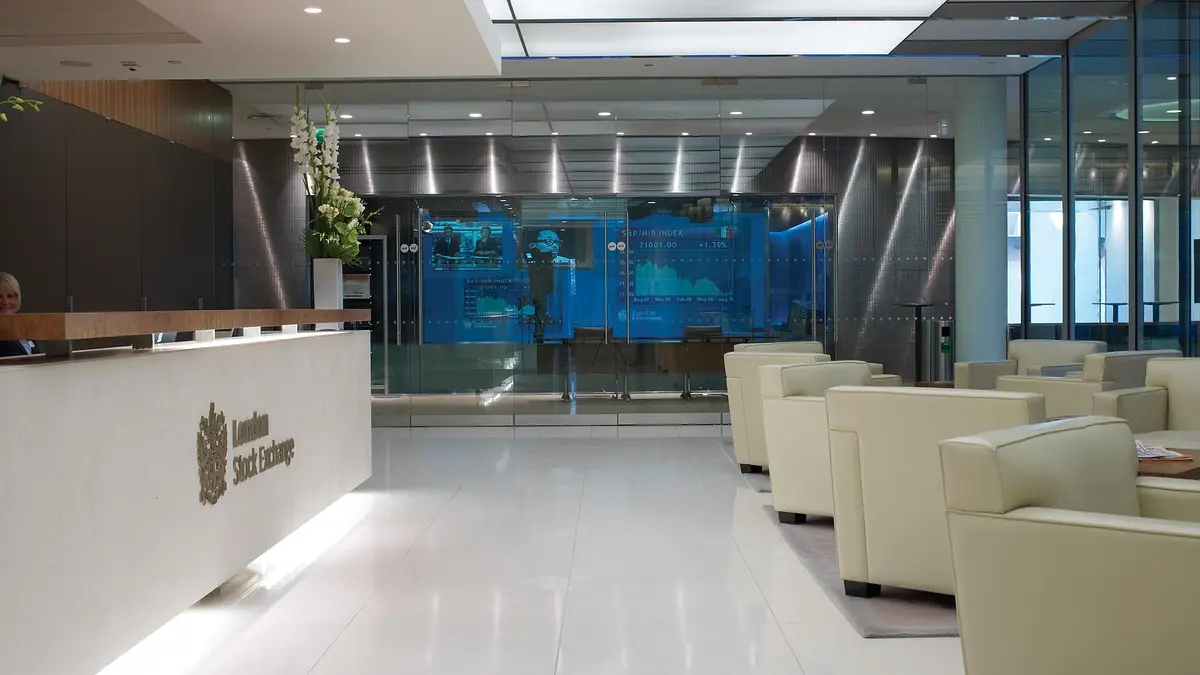
- 08Lead image: London Stock Exchange, Paternoster Square.jpg · London Stock Exchange, via Wikimedia Commons (CC BY-SA 3.0) · Accessed 13 November 2026
House byline
Articles under this byline are researched and drafted with AI assistance, with every figure checked against its source before publication. The editor, Pankaj Guleria, reviews them and corrects them where needed.
Edited by Pankaj Guleria, Founder and Editor