Contents
The new weight-loss drugs have become some of the biggest-selling medicines in the world. Two pharmaceutical companies, Denmark’s Novo Nordisk and America’s Eli Lilly, dominate the market. The question now is how much bigger the market can get, and what will happen to prices as it grows.
This article is about the business of these drugs. It is not medical advice.
What the drugs are
The medicines copy hormones the gut releases after a meal. The best known, GLP-1, tells the brain that the body has eaten and slows the emptying of the stomach, so people feel full sooner and eat less. The drugs are often called GLP-1s for that reason.
Two active ingredients lead the market:
- Semaglutide, made by Novo Nordisk and sold as Ozempic for diabetes and Wegovy for weight loss.
- Tirzepatide, made by Eli Lilly and sold as Mounjaro and, in the US, Zepbound. It mimics a second gut hormone as well as GLP-1.
Both were first given as weekly injections. Both companies now also sell pill versions.
How well they work
The results explain the demand. In SURMOUNT-1, the trial that supported tirzepatide’s approval for weight loss, 2,539 adults with obesity were given one of three doses or a placebo for 72 weeks. Their average starting weight was 104.8kg.
| Weekly dose | Average change in body weight |
|---|---|
| 5 mg tirzepatide | down 15.0% |
| 10 mg tirzepatide | down 19.5% |
| 15 mg tirzepatide | down 20.9% |
| Placebo | down 3.1% |
More than half of those on the two higher doses lost at least a fifth of their body weight. The most common side effects were digestive, and most were mild to moderate. Between 4% and 7% of people on the drug stopped because of side effects, against 2.6% on placebo. The trial was paid for by Eli Lilly.
| Item | % of body weight |
|---|---|
| Tirzepatide 15mg | 20.9% |
| Tirzepatide 10mg | 19.5% |
| Tirzepatide 5mg | 15.0% |
| Placebo | 3.1% |
Source: Jastreboff and others, New England Journal of Medicine. Chart: The Sidelight.
How big the market has become
Lilly’s third-quarter results, published on 29 October 2026, show the scale.
In the first nine months of the year Mounjaro and Zepbound together sold almost $44 billion. Lilly raised its forecast for the full year by $5.5 billion at the midpoint.
Novo Nordisk, which launched its drugs first, has been losing ground. Fierce Pharma reported that its third-quarter sales rose 4% at constant exchange rates, to nearly 79.1 billion Danish kroner, about $11.9 billion. Its injectable Ozempic and Wegovy continued to lose share to Lilly’s products. Its pill was the bright spot. Wegovy pill sold 5.39 billion kroner, about $811 million, in the quarter, well ahead of Lilly’s pill, and has launched in the UK among other countries.
In the first nine months of 2026, Mounjaro and Zepbound together sold almost $44 billion.”
Prices are falling as volumes rise
The growth comes from selling far more doses, not from charging more for each. Lilly said its US revenue rose 34% even though the prices it actually received fell 7%. Outside the US, its revenue rose 47% on a 76% rise in volume, while prices fell 29%. Much of that fall came from Mounjaro being added to China’s national list of drugs the state pays for, which brings a much lower price in return for far more patients.
This is the central trade-off for the industry. Each new market, insurance deal or government scheme brings more patients at a lower price. As long as volume grows faster than prices fall, revenue rises.
Pills could push this further. Both companies are betting that they will reach people who would not use a weekly injection.
The NHS: eligible millions, slow access
In England, the medicines watchdog NICE has approved tirzepatide for weight loss. NHS England’s commissioning guidance estimates that 3.4 million people are eligible. To manage the cost, access is being phased in over up to 12 years. The first three years, from 2025 to 2028, are expected to reach about 220,000 patients.
The first group to qualify through GPs is narrow: adults with a body mass index of 40 or more and at least four of five related conditions, such as high blood pressure and type 2 diabetes. The threshold is lower for some ethnic groups at higher risk. Patients must also receive support on diet and behaviour alongside the drug.
Progress has been slow. In February 2026 the government set aside £25 million to encourage GP practices to prescribe, through new measures in the GP contract, the Pharmaceutical Journal reported. The head of the National Pharmacy Association said the NHS rollout “remains very slow”. Many people instead pay for the drugs privately.
What could change the picture
Competition. Two companies hold most of the market. More competitors would be likely to push prices down.
Patent expiry. Patents on these medicines will eventually expire, allowing cheaper copies to be sold.
Long-term use. If people need to keep taking the drugs for years, that supports long-run demand, but it also raises the total cost to health systems and insurers, who may push harder on price.
Wider uses. Lilly’s results mention a US approval for Mounjaro to reduce cardiovascular risk in adults with type 2 diabetes. Each new approved use widens the market.
The conclusion so far
On the evidence of 2026, this is one of the largest and fastest-growing markets in the drug industry, and it is shifting towards Eli Lilly. The direction of travel is towards far more patients paying far less per dose, with pills and government schemes doing much of the work. What would change that conclusion is prices falling faster than volumes grow, as competition increases and patents expire, or evidence of long-term side effects that shift the balance of benefit and risk.
References and sources
- 01Lilly reports third-quarter 2026 financial results · Eli Lilly and Company, filed with the US Securities and Exchange Commission · 29 October 2026
- 02Novo catches Wegovy pill tailwind in Q3 as CEO eyes new launch horizons in 2027 · Fierce Pharma · 4 November 2026
- 03Tirzepatide Once Weekly for the Treatment of Obesity (SURMOUNT-1) · Jastreboff and others, New England Journal of Medicine (PubMed record) · 21 July 2022
- 04Interim commissioning guidance: implementation of NICE TA1026 tirzepatide · NHS England · 2 April 2026
- 05Pharmacies respond to GP funding incentives for weight-loss drugs · The Pharmaceutical Journal · 24 February 2026
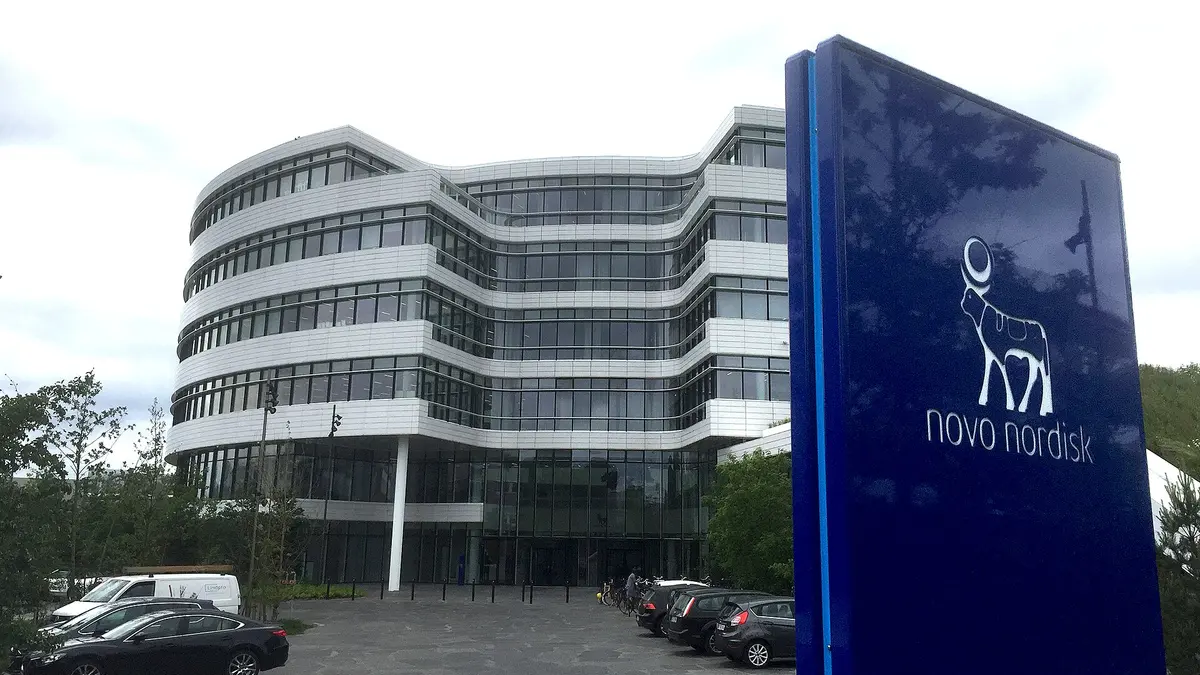
- 06Lead image: Novo Nordisk headquarters building Denmark.jpg · News Øresund / Johan Wessman, via Wikimedia Commons (CC BY 3.0) · Accessed 13 November 2026
House byline
Articles under this byline are researched and drafted with AI assistance, with every figure checked against its source before publication. The editor, Pankaj Guleria, reviews them and corrects them where needed.
Edited by Pankaj Guleria, Founder and Editor